
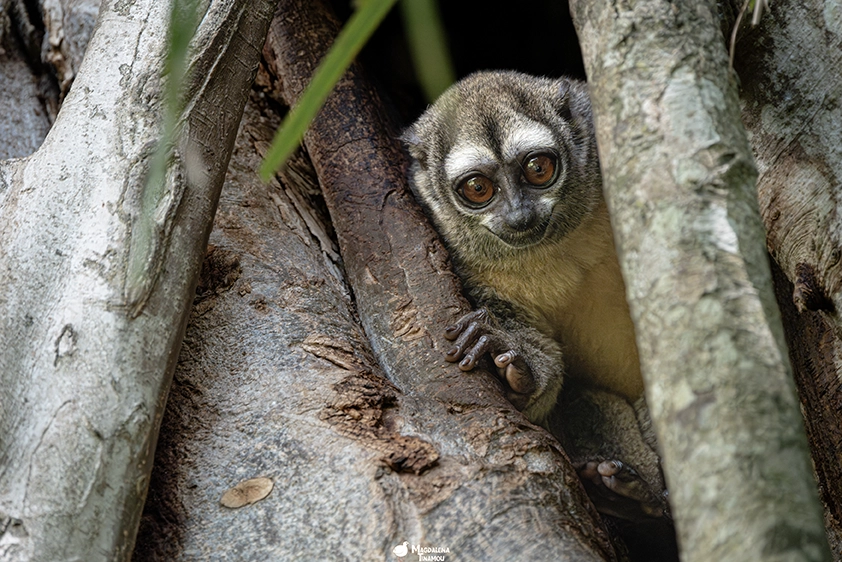
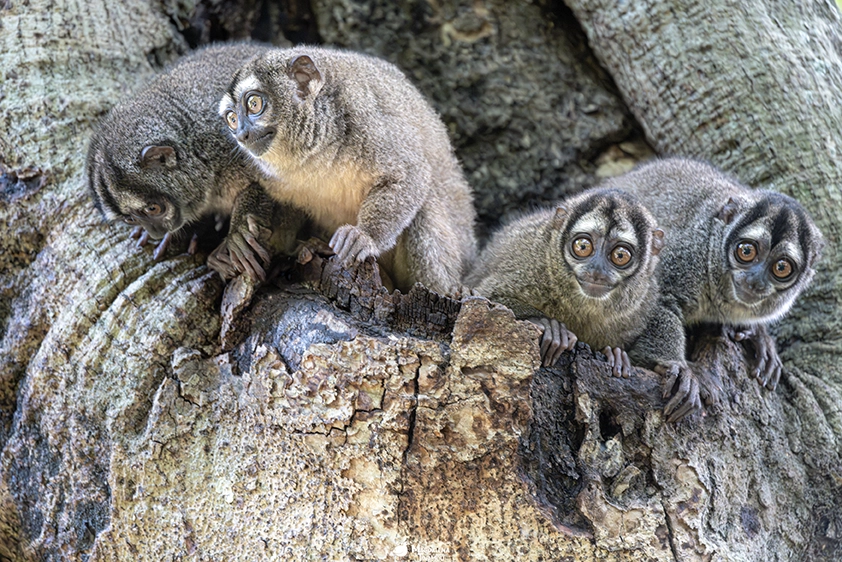
On warm nights in the Tropical Dry Forest, when silence seems to reign, a curious gaze emerges among the branches.
These are the night monkeys (Aotus griseimembra), also known as “owl monkeys” or “night monkeys,” small primates that have found refuge and purpose in the darkness. Their presence often goes unnoticed, yet their role in maintaining ecosystem balance is essential.
Dispersers of Life
Aotus griseimembra feeds mainly on ripe fruits, nectar, and insects. As it moves through the forest and consumes fruit, it becomes a natural seed disperser, helping new plants germinate far from the parent tree.
Each seed left behind by this small primate has the potential to grow into a new tree, contributing to the natural regeneration of the Tropical Dry Forest—one of the most threatened ecosystems on the planet.
Studies show that frugivorous monkeys such as Aotus can disperse hundreds or even thousands of seeds each year, sustaining plant diversity and ensuring food availability for other wildlife. Without them, forests would lose a crucial part of their life cycle.
Its Role in the Ecosystem
The night monkey does far more than help replant the forest:
- It controls insect populations, maintaining balance between pests and vegetation.
- It serves as prey for natural predators such as birds of prey and snakes, forming part of the food web.
- It acts as an indicator of habitat health: its presence signals that forest fragments remain in good condition, with fruit-bearing trees and natural shelters.
- For these reasons, Aotus griseimembra is considered a bioindicator of healthy ecosystems. Where night monkeys exist, life persists
A Vulnerable Species
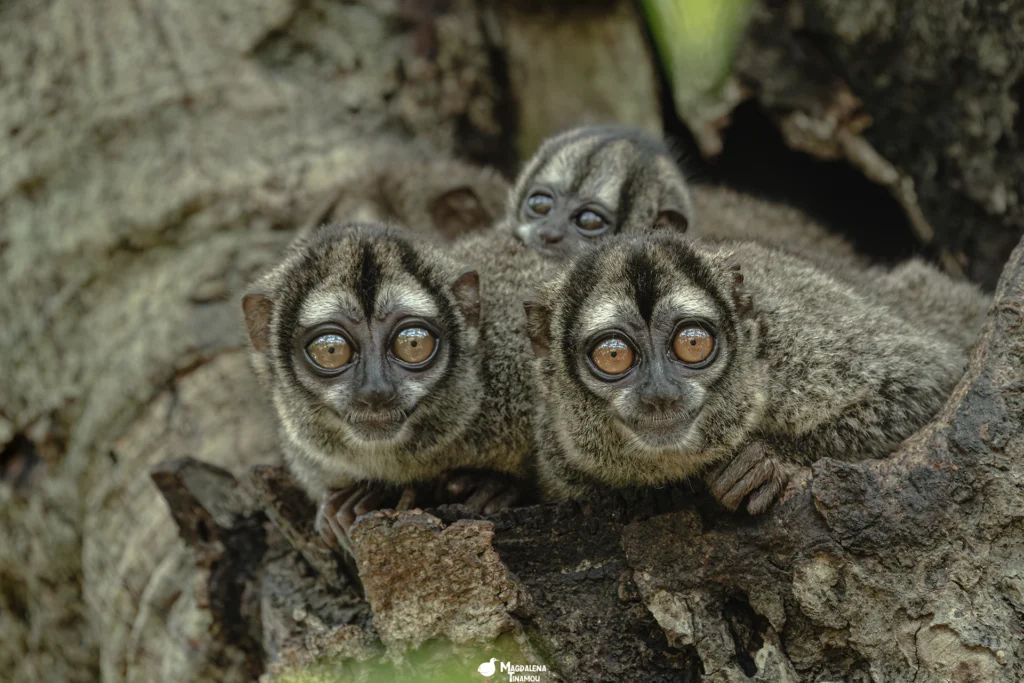
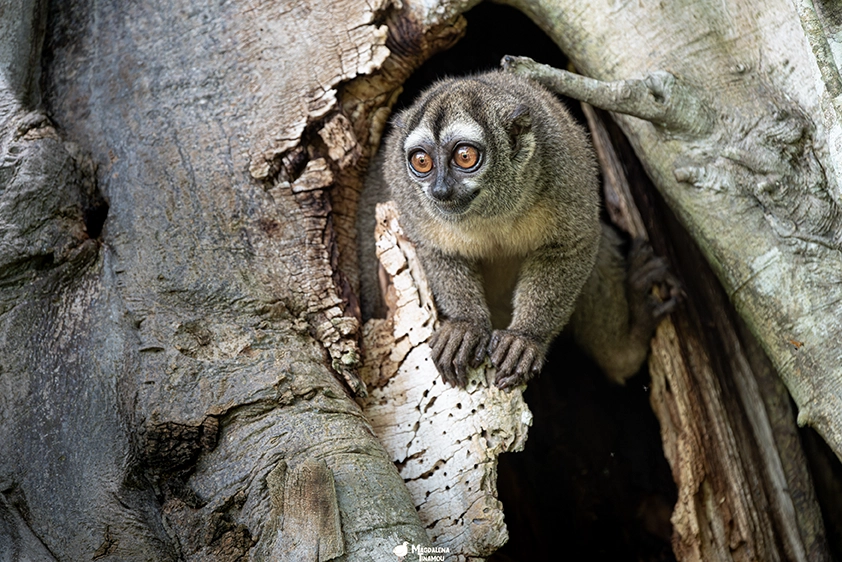
Unfortunately, Aotus griseimembra is classified as Vulnerable (VU) by the IUCN. Its populations have declined due to:
- Habitat loss, caused by deforestation for cattle ranching and urban expansion.
- Illegal wildlife trade and pet keeping, as its gentle appearance makes it a frequent target.
- Forest fragmentation, which isolates populations and disrupts natural reproduction.
- Each hectare of forest lost means one less home for these primates.
Conserving Forests Is Conserving Life
Protecting Tropical Dry Forests is not only about safeguarding night monkeys; it is about protecting water sources, clean air, and food systems for thousands of species, including humans. These ecosystems store carbon, regulate climate, and sustain Colombia’s biodiversity.
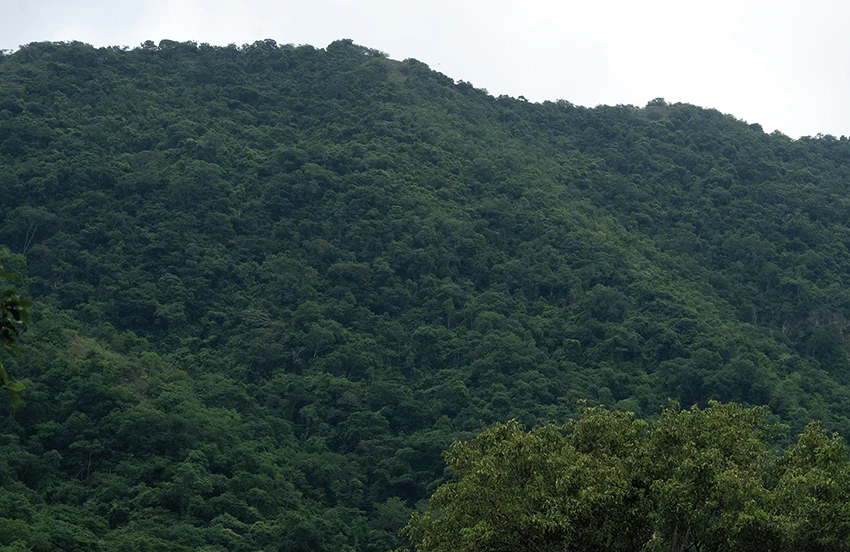
In places like Honda, Tolima—where remnants of Tropical Dry Forest still survive—night monkeys remind us that every tree matters. Protecting their habitat helps preserve the natural history of the Magdalena River and its wildlife
A Call from the Night
As the sun sets and the forest fills with sound, the shining eyes of the night monkey watch us from the canopy. It does not speak, but its message is clear:
“As long as trees exist, there is hope.”
Caring for the forest means caring for those who inhabit it—and in that mission, we are all part of the same tree of life.